Urn
One of eighty-seven terms in the funeral glossary
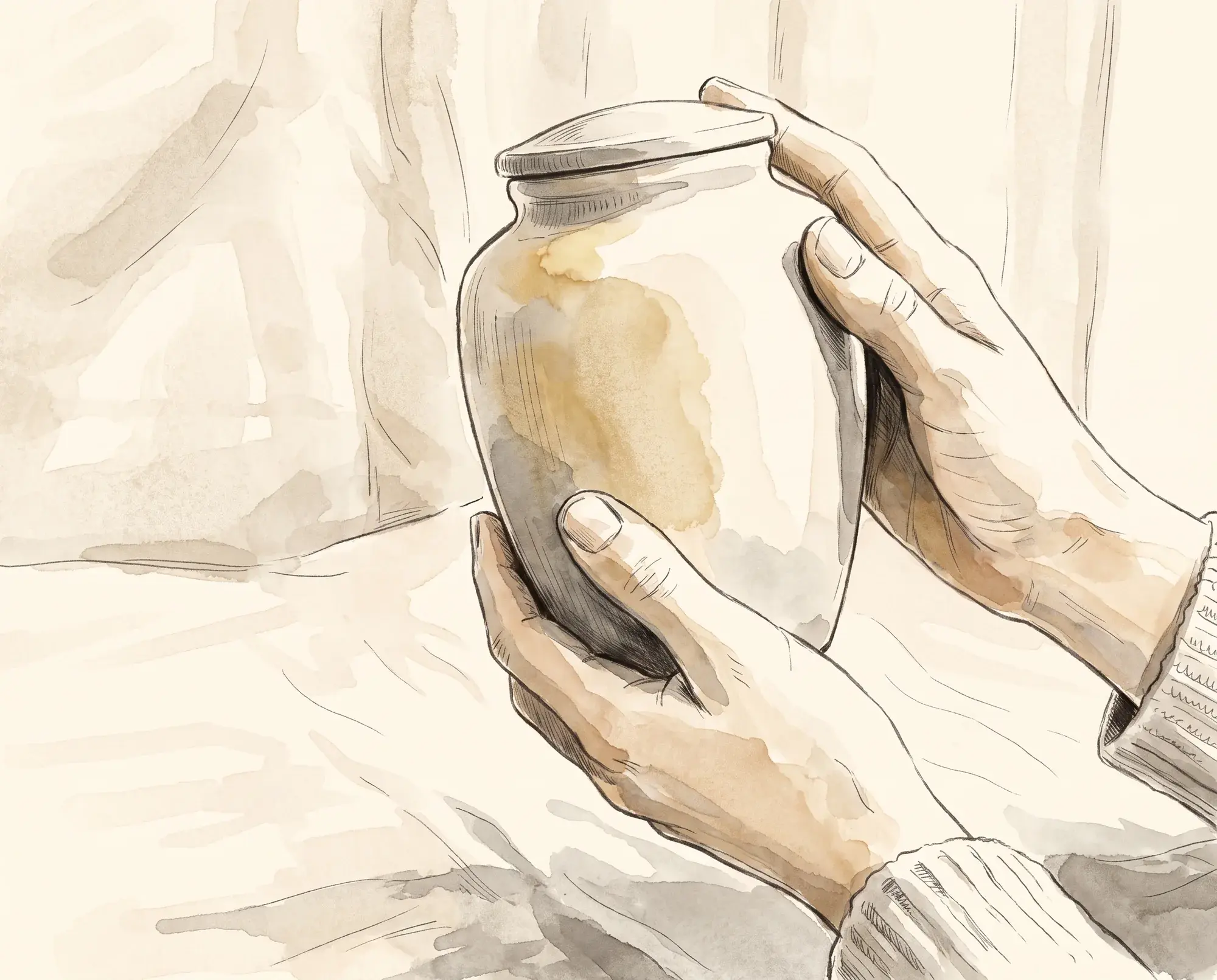
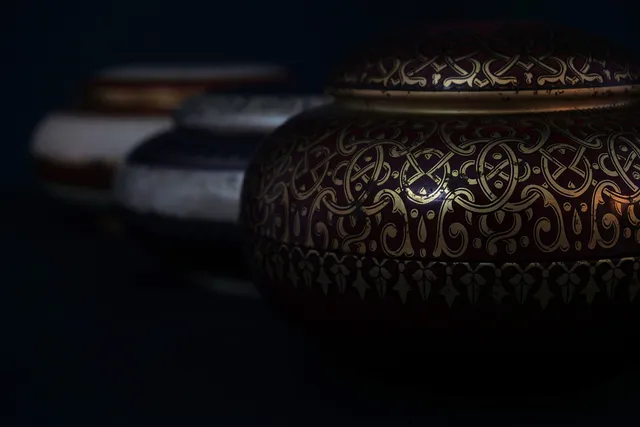
An urn is the container that holds a person’s ashes after cremation. Families keep it at home, bury it or place it in a memorial. If you are flying with ashes, use a non-metallic urn so it can pass through the airport X-ray.
Do you need one
Not straight away. The ashes come back from the crematorium in a plain container, usually sturdy plastic or cardboard, and it is perfectly good for as long as you need it. An urn is a choice rather than a requirement, and the right one depends on what you plan to do with the ashes. Families who buy one in the first week sometimes change their minds about its use later.
Choosing by what it is for
Start with size. An adult’s ashes weigh two to four kilograms, and urns are sold by capacity, so check that before the design. For keeping at home, any material that seals well will do: wood, ceramic, stone, metal or glass. For a burial in the ground or at sea, a biodegradable urn of untreated wood, cardboard, salt, sand or plant fibre is the usual choice, and most cemeteries require one for an ashes plot. For scattering ashes, a scattering tube with a perforated lid does the job best. Keepsake urns, and jewellery with a small sealed chamber, let several relatives each keep a token amount.
Travelling with an urn
Metal and thick stone block the image on an airport X-ray scanner, which can mean the ashes are not allowed through. Wood, cardboard, plastic, biodegradable material or a light ceramic all scan. Many families use a plain travel urn for the flight and move the ashes into the chosen urn on arrival. Taking ashes abroad also calls for a funeral director’s declaration of what the urn contains (see taking ashes abroad).
Where to buy one
From the funeral director, a memorial retailer, a craftsman or anywhere else. Nothing requires the urn to come from the funeral director who arranged the cremation. Prices run from a few pounds for a scattering tube to several hundred for a handmade piece.

Someone answers, any hour of the day
Tell us where your loved one is and we will tell you what happens next, and what it costs.

 Nigeria
 Jamaica
 Romania
 Bulgaria
 Slovakia
 France
 Germany
 Hungary